

Happy and Healthy
In Your Own Skin
Spring Cleaning Your Skincare Cabinet: Expiration Dates and Stability
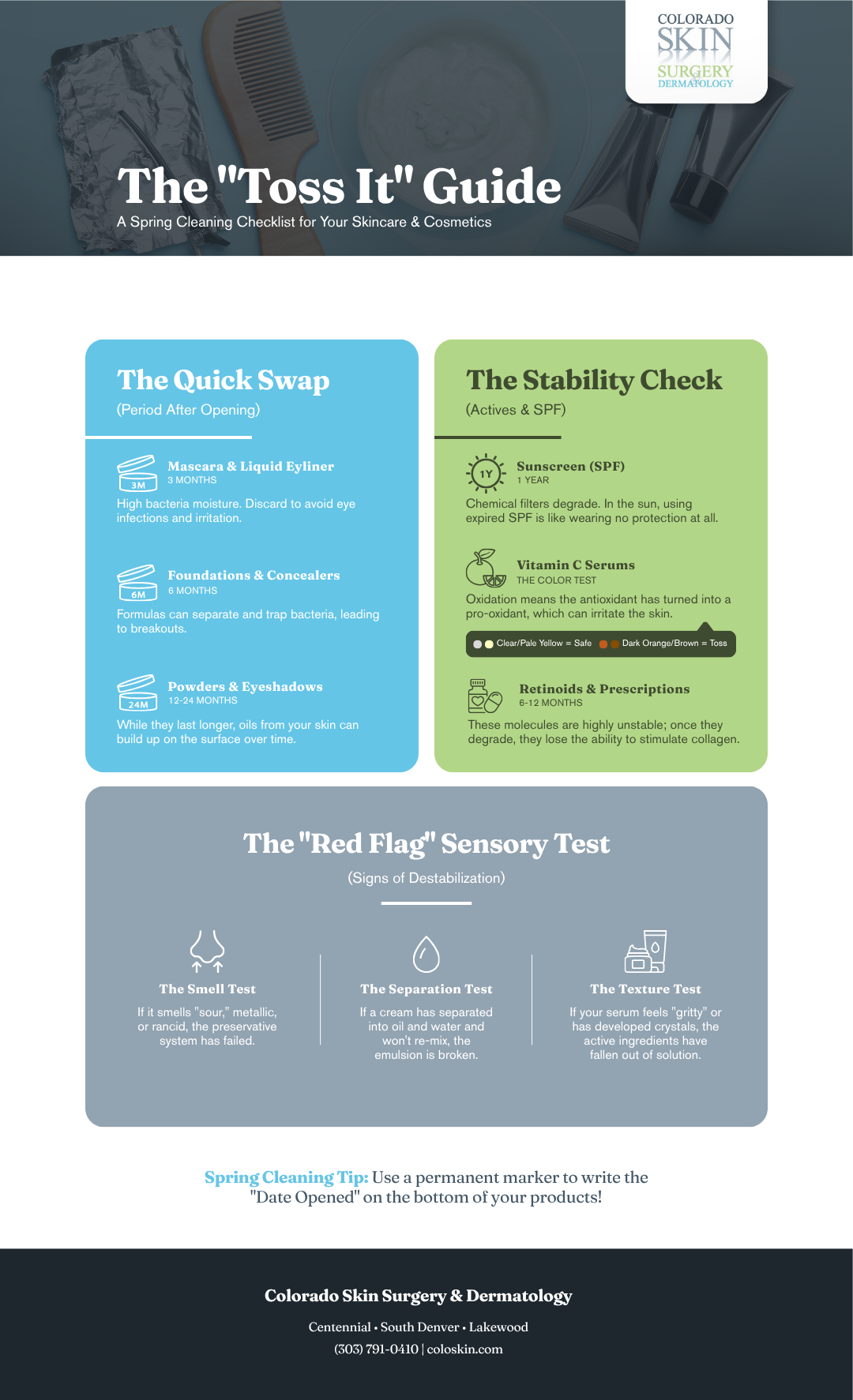
As the season shifts, many of us focus on refreshing our homes, yet we often overlook the shelf life of the products we apply to our most vital organ: the skin. At Colorado Skin Surgery & Dermatology, we believe that healthy skin begins with the integrity of your topicals. Using expired or unstable products is not just ineffective—it can lead to irritation, breakouts, and even infection. Spring is the ideal time to audit your vanity, assess the stability of your serums, and ensure every step of your routine is contributing to a radiant, healthy complexion.

Understanding the PAO Symbol and Expiration Dates
Unlike food, skincare products often lack a traditional “Best By” date. Instead, look for the Period After Opening (PAO) symbol—a small icon of an open jar with a number followed by an ‘M’ (e.g., 12M). This indicates how many months the product remains stable after it has been unsealed. Generally, cleansers and moisturizers last about a year, while active treatments like Vitamin C or prescription retinoids may lose potency much faster. If a product has no date and you cannot remember when you bought it, it is safer to dispose of it.
Identifying Signs of Chemical Instability
A product’s stability can be compromised long before its official expiration date if exposed to heat, light, or air. Perform a sensory check: has the texture separated? Is there a change in scent? Color shifts are particularly telling for antioxidants; for instance, a Vitamin C serum that has turned dark orange or brown has oxidized and may actually cause oxidative stress on the skin. If the consistency feels gritty or the smell has become “off,” the preservative system has likely failed.
The Risks of Using Expired Sunscreen
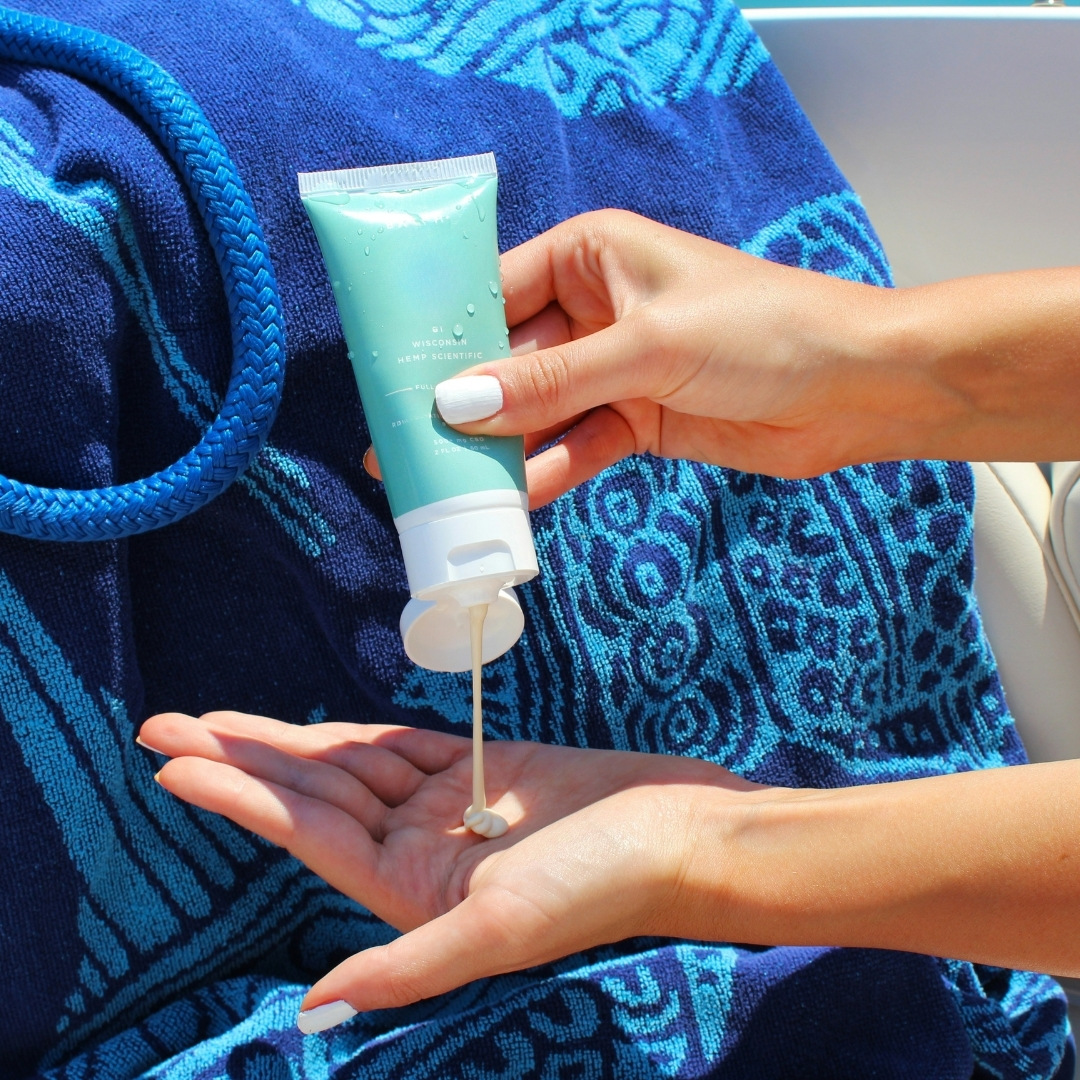
Sunscreen is the most critical item to monitor. The active UV filters in SPF degrade over time, meaning an expired bottle provides a false sense of security while leaving you vulnerable to UV damage and skin cancer. Because Colorado’s high altitude increases UV intensity, using fresh, stable sunscreen is non-negotiable. If your SPF has been sitting in a hot car or has passed its date, replace it immediately to ensure your skin remains fully protected.

Proper Storage to Prolong Product Life
To maximize the lifespan of your skincare, storage is key. Avoid keeping high-potency serums in a humid, steam-filled bathroom. Instead, store products in a cool, dry, dark place. Always ensure lids are tightened firmly to prevent oxidation, and use a clean spatula for products in jars to avoid introducing bacteria from your fingers, which can destabilize the formula’s preservative system.
Schedule Your Seasonal Skin Assessment
Clearing out the old makes room for a more effective, medical-grade approach to your skin health. If you are unsure which products are right for your specific concerns, our board-certified dermatologists are here to help you build a streamlined, high-performance regimen. Contact Colorado Skin Surgery & Dermatology today to schedule a consultation at our Centennial, South Denver, or Lakewood locations.